

The impact of COVID-19 on our day-to-day life cannot be understated. Since the first lockdown in March 2020, we have had to become accustomed to spending more time in our homes, be that for work or leisure.
While the pandemic has brought with it emotional, and in some cases, physical challenges, it may have prompted you to reassess your way of life in search of a calmer existence and a better work-life balance.
If you search the internet, you’ll find a myriad of self-help sites aimed at helping you to deal with stress and get into better physical shape. As increasing numbers of people turn to meditation, yoga, and other forms of healthy living, it’s never been easier to discover ways to enjoy a happier, more physically active, and stress-free way of life.
According to recent research by Aegon, a key part of finding happiness and peace of mind is to have the right mindset towards your money. Fundamental to this, it reveals, is understanding what brings you happiness and joy, helping you live a more fulfilled life.
Read on to discover 10 simple but effective ways to create a better you, helping you make the most of life.
1. Set goals and plan for tomorrow
Feeling good about the future is key to our happiness. Goals motivate us if they are challenging enough to excite us and are achievable, as the unachievable ones only create unnecessary stress.
Goals provide direction and bring a sense of accomplishment and satisfaction when they’re achieved. According to Action for Happiness, the organisation that aims to build a happier society, having a goal gives us the following benefits:
- Provides something of interest, engagement or pleasure
- Provides us with a sense of meaning and purpose
- Brings a sense of accomplishment when it is achieved
- Builds confidence and belief in ourselves
- Focuses our attention.
Having targets and hitting milestones along the way could be as important for our wellbeing as achieving the target itself.
An effective way to achieve this is to create a financial strategy, onto which you can add your personal and financial targets and create milestones. Working with a financial planner will not only help you measure your successes, but will also improve your ability to reach them, providing you with the confidence boost that comes with it.
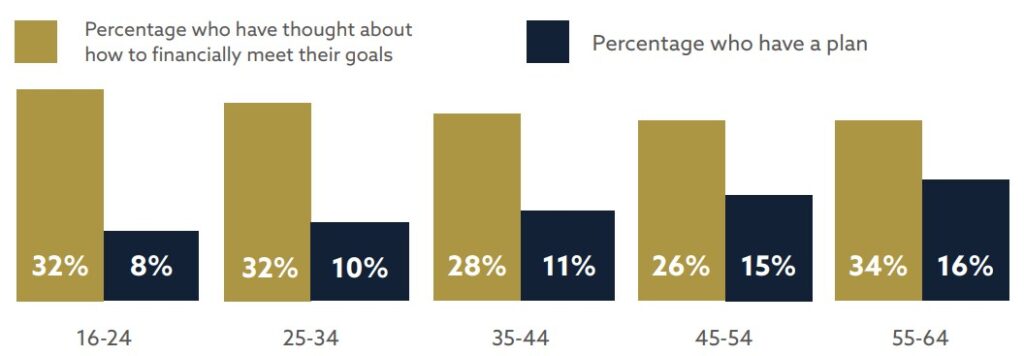
Research by protection and pension provider Aegon shows that people across all age groups think about life goals and how they could afford to achieve them.
Even though a strategy could help achieve those goals, the graph below shows few people actually create one, something a financial planner can help you to do.
Source: Aegon
2. Exercise to keep your body and mind healthy
While many are familiar with the “endorphin rush” released when exercising, it also increases happiness by:
- Lowering stress levels
- Reducing feelings of loneliness and isolation
- Helping to relieve anxiety and depression.
Through exercise, you release natural cannabis-like brain chemicals to enhance your sense of well-being. Apart from taking your mind off worries as you concentrate on your exercise regime, it helps improve confidence as you meet goals and challenges.
Just walking can improve your health and be beneficial to your mood. According to one study, 150 minutes of exercise per week can help ease mental health disorders such as anxiety and depression.
But mixing exercise with something you enjoy can give the biggest boost to your mood. Dancing, yoga, working out in the garden and hiking are all superb forms of exercise that have the additional mental boost of enjoyment.
Dancing can burn more energy and make you feel better about yourself than running. That’s according to the University of Brighton, which found you could expend more than 300 calories every half-hour when you’re dancing – more than the energy burnt during a run or swimming.
3. Boost your mental wellbeing by looking after yourself
At a time when we live increasingly busy lives, looking after yourself can boost your mental and physical health, helping you feel better about yourself in every area of your life.
BMI Healthcare explains that better self-care can improve your physical health as it involves looking after your body, while also reducing stress and anxiety. This, it reveals, protects mental health as you give yourself time to relax, ultimately providing you with increased resilience and an improved ability to overcome setbacks.
Whether participating in a sport or hobby, playing a musical instrument, gardening, or taking a soothing bath it must help you feel more relaxed and lift your mood. But this is not the only way to boost mental wellbeing. According to recent research by Aegon, working with a financial planner can help develop five “mindset building blocks” that could help boost your overall financial wellbeing and reduce stress.
The building blocks include:
- Knowing what makes you happy. As only 4 out of 10 people consider the things that give them joy, the research suggests considering what provides joy and makes you feel useful.
- A solid picture of your future self. One-third of people have a clear idea of their future self. Asking what future you would thank yourself for 10 years from now could help you make better financial decisions.
- Having savvy social comparisons. As your financial wellbeing can change when you compare yourself to others, find a suitable role model.
- Having a long-term plan. As already discussed, if you do not have a long-term strategy or plan you’re not alone, but creating one could help you achieve your goals.
- Having a strong nerve in a crisis (resilience). As bad news can result in knee-jerk decisions you later regret, speaking to a financial planner can help avoid this, and better manage investments and wealth.
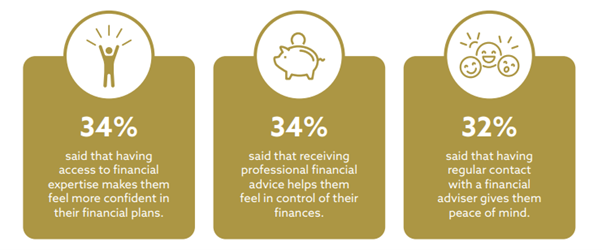
Research by Royal London found that those who use a financial planner worried less about financial issues and suffered reduced anxiety.
Here are five simple yet effective ways to practise self-care.
1. Get a good night’s sleep (7-8 hours)
2. Have a relaxing bath
3. Enjoy a brisk walk
4. Listen to your favourite music or watch a favourite film
5. Spend time with loved ones
4. Do the things that make you happy
Feeling great about what you are doing makes a world of difference to the way you see it, and yourself. Having a career you enjoy, or a hobby that takes you to a place of joy, makes a huge difference to your mental and physical health.
Scientific evidence also suggests that being happy boosts your immune system, protects your heart, and may help reduce pain. If those aren’t good enough reasons to do things that make you happy, according to the Harvard Medical School, it may help increase your life expectancy.
Key to feeling happy is laughter. Research suggests this could be good for you as it has several physical health benefits, including:
- Relaxing the body. A hearty laugh relieves physical tension and stress, leaving your muscles relaxed for up to 45 minutes afterwards.
- Boosting the immune system by reducing stress hormones and increasing immune cells and infection-fighting antibodies.
- Releasing endorphins, which are the body’s natural feel-good chemicals, promoting a sense of wellbeing that can temporarily relieve pain.
- Protecting the heart as it improves the function of blood vessels and increases blood flow.
According to research by Aegon, enjoying a better lifestyle is about concentrating on what makes you happy, not having more. Indeed, striving for a higher income could mean you’re too exhausted to actually enjoy the possessions you can afford to buy.
Working with a financial planner could help identify ways to provide a life that will make you happy, without the additional stress of a higher paid role.
5. Get outside – it’s good for you
According to Mind, getting out into the countryside, working in your garden, or volunteering to work in the great outdoors can help to:
- Improve your mood
- Reduce feelings of stress or anger
- Improve concentration
- Improve physical health
- Boost self-esteem.
The Mental Health Foundation explains that, while the reasons behind nature’s positive impact on our wellbeing are still being understood, research continues to confirm the link between the great outdoors and feeling great physically and mentally.
It adds that the benefits of walking or running are emphasised when done in natural environments rather than indoors, helping reduce feelings of anger, fatigue, and sadness. But you don’t have to exercise or be out in the great outdoors: getting out into your garden offers mental and physical health benefits, as can planting vegetables in your garden or tending an allotment.
Looking for ways to connect with nature? Try the Mental Health Foundation and WWF’s Thriving with Nature guide, which provides suggestions.
6. Give back in some way
According to Action Mental Health, giving to others stimulates the reward areas in the brain, creating positive feelings.
Studies have shown that giving in all its forms provides feelings of improved wellbeing and can help combat feelings of stress, depression, and anxiety. It can also provide mental stimulation and improve self-confidence through increased sense of purpose.
Giving your time to volunteer for a charity can also help provide physical benefits such as working in a shop or working outside doing activities such as coppicing or maintenance of green spaces.
Another way you may want to give back is by leaving part of your estate to charity. This can reduce the rate of Inheritance Tax from 40% to 36% if you leave more than 10% of your entire estate to charity. Speaking with a financial planner can help you leave money to a good cause and your loved ones in the most tax-efficient way, potentially allowing you to leave more money to both.
7. Practise mindfulness
Visit the NHS website and you may be surprised to see that it promotes mindfulness, which is the total awareness of everything happening inside you and around you. The website explains that being mindful can help you take enjoyment from a wide range of situations, providing more fulfilment from life.
“Awareness of this kind also helps us notice signs of stress or anxiety earlier and helps us deal with them better,” explains Professor Mark Williams, former director of the Oxford Mindfulness Centre.
The NHS provides several simple steps to be more mindful, including:
- Reminding yourself to take notice of your thoughts, feelings, body sensations and the world around you.
- Noticing everyday things, from the food you eat to the air moving past your body, as being more aware can provide a different perspective.
- Trying something new by sitting in a different seat or going somewhere different for lunch, as this can help you to notice the world in a new way.
- Watching your thoughts: when you have lots of thoughts and worries, try to see them as “thought buses” coming and going without you having to get on them and be taken away.
- Practising yoga and tai-chi, as this can help develop an awareness of breathing and being present.
8. Try something new
Trying something new not only enriches your life by connecting you to others, but it helps boost your confidence and self-esteem, providing a sense of purpose.
Whether it’s cooking, learning to play a musical instrument, writing a blog, or starting a new sport, finding the time to start a new hobby or pastime could give you a boost.
Starting a sport or activity also provides physical benefits that can improve fitness and strengthen your heart, improving circulation. This lowers risks of heart disease such as high cholesterol, coronary artery disease and heart attack.
9. Make time for relationships
If there is one thing that the Covid lockdown may have done, it’s to appreciate the time we spend with friends and family. Indeed, not being able to see loved ones has probably been one of the main reasons for increased anxiety during the pandemic.
The Mayo Clinic reports that being with those we enjoy spending time with provides mental and physical health benefits. Dr Craig Sawchuk, a psychologist at the clinic, explains that socialising is key to good health.
“We are social animals by nature, so we tend to function better when we’re in a community and being around others,” he says.
Dr Sawchuk goes on to explain that those who spend a lot of time alone have an increased risk of depression and lower quality of life. This is because socialising stops feelings of loneliness, helps to sharpen memory and cognitive skills, and increases happiness and wellbeing.
10. Work with a financial planner
A major new report by Aegon reveals that your mindset around money can boost financial wellbeing. Researchers found that just 8.6 million people (16% of the population) combine healthy finances and a positive money mindset.
The research also revealed that:
- Only 13% of us have a plan to achieve our long-term money goals
- Just 40% of us think about what gives us joy and purpose in life
- 55% of average earners and more than one in three top earners worry about money.
Having a financial planner can help you improve your mindset around money by helping you to develop strategies with clear ideas about where you want to be in the future.
In addition to this, working with a financial professional will enable you to understand your investments and wealth, providing peace of mind and confidence that will bring you more enjoyment in life.
To discuss your financial plan, please contact us:
