

Sustainability has become a key topic for governments, businesses, and communities around the world.
Climate change and its impacts on the future are some of the most important topics of this century. In 2021, the United Nations Climate Change Conference, known as “COP26”, will be held in the UK. COP26 aims to encourage countries to take action to keep global temperature rise in this century below 2 degrees Celsius above pre-industrial levels. A rise above this target is predicted to cause irreversible changes to global ecosystems.
While important, sustainability is about far more than climate change. It’s about managing the use of natural resources to support long-term ecological balance. This could include reducing deforestation, recycling precious materials used in technology, or switching to renewable energy sources. Sustainable practices can improve the quality of life of people around the world and preserve natural resources for future generations.
Sustainability challenges can seem huge, but there are things individuals can do to minimise the impact they have on the environment and society.
Sustainability noun
The use of natural products and energy in a way that does not harm the environment.
How sustainable is your life?
According to a survey from Pru, 55% of UK adults say they live sustainably. When asked what specific action they are taking to live more sustainably, the responses included:
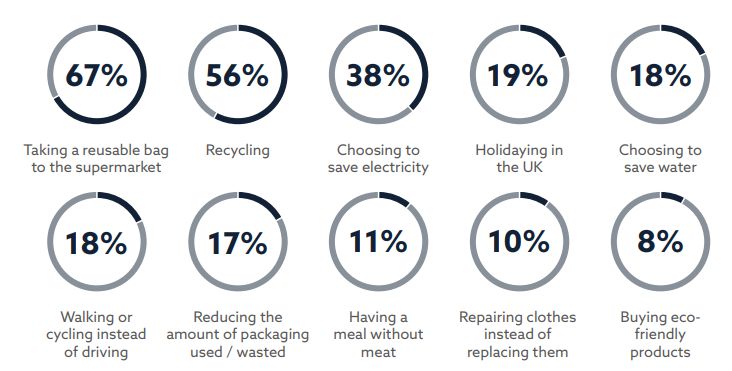
Thinking about the impact your choices have on the wider environment can help you identify where you can make meaningful changes.
Even small, consistent changes can add up, especially when they’re done collectively. The move to limit the number of single-use plastic shopping bags in the UK is a great example of this. The government introduced a 5p charge in 2015 to encourage shoppers to use reusable shopping bags. Within five years, the government figures show that plastic carrier bag sales fell by more than 95%. The average person in the UK now buys around four bags a year from the largest supermarkets. This compares to 140 in 2014. It’s a small change to an individual’s shopping habits but the impact adds up.
If you’re looking for ways to improve your sustainability credentials, here are 10 ideas that could help you.
1. Keep “reduce, reuse, recycle” in mind
The three R’s – reduce, reuse, recycle – have been around for decades, but it’s still an important mindset for sustainability. Keeping these three options in mind when deciding whether to make a purchase or what to do with items can have a positive environmental impact.
- Reduce – Do you really need to buy a new item? Whether it’s a single-use item or not, reducing consumption can have a positive impact on the environment.
- Reuse – Can an item be reused or repaired to extend its lifecycle? If it’s not something you can reuse, could someone else or a charity benefit from it?
- Recycle – Where an item can’t be reused, can it be recycled? From adding recyclable materials to your recycling bin at home to sending a mobile phone to be recycled, you can give products a new lease of life.
2. Take steps to make your home more energy-efficient
If you’d like to make your home more energy-efficient, you’re not alone. Research from the Energy Saving Trust found that 96% of UK homeowners are concerned about their home’s energy efficiency.
Homes that aren’t energy-efficient mean households spend more on energy and produce more CO2 than necessary. While the current and past governments have said improving the UK’s housing stock is vital, figures suggest it’s a goal we’re falling behind on.
According to a BBC report, almost two-thirds of UK homes are failing to meet long-term energy efficiency targets. In 2020, more than 12 million homes had an Energy Performance Certificate (EPC) below grade C.
Improving energy efficiency could boost your home’s value
An Energy Performance Certificate (EPC) rates a property’s energy efficiency from A–G. The average rating in the UK is D.
If your home’s EPC is low, energy-efficient measures could be an investment. Which? found that buyers are increasingly willing to pay a “green premium” and homes with high energy efficiency ratings are worth up to £40,000 more than less efficient properties.
Which changes will improve your home’s EPC rating will depend on the property. As a general rule, newer properties will need fewer updates than those built before 1990. Some of the improvements that can have a large impact on energy efficiency include:
- Insulating your roof
- Insulating your walls
- Draught-proofing windows
- Upgrading your boiler.
An EPC will show your home’s energy performance score, as well as a list of recommended improvements with their estimated cost savings. This can help you see which projects are worth investing in.
Small steps can have an impact too. From switching to efficient light bulbs to choosing efficient appliances, little changes can reduce the amount of energy you use.
3. Choose renewable energy
It’s not just how much energy we use, but where that energy comes from that’s important. The UK is gradually moving towards embracing renewable energy sources that can reduce your impact on the environment. In the second quarter of 2021, more than a third of the UK’s energy needs were met by renewables, according to government data.
Switching to a renewable energy supplier can reduce your carbon footprint. There are now several options to choose from if you want your energy to come from 100% renewable sources. Many more providers are increasing how much of their energy comes from renewables too.
Choosing a renewable supplier doesn’t mean your energy bills will automatically increase. However, you should compare tariffs.
For some properties, adding renewable energy sources makes sense too. Could your home benefit from solar panels? Or could an air source heat pump cut your heating bill? While these measures can be a costly investment, they can pay for themselves over the long term.
4. Save water where you can
How much water do you use every day?
A survey from Water UK found that 46% of people believe their household uses under 20 litres a day. That’s far below the average figure of 142 litres a day for one person.
With water readily accessible in homes across the UK, it’s easy to take it for granted. But it is a precious resource that we need to protect. Increased frequency of droughts across the UK and the rest of Europe means we’re more likely to face periods of water stress than in the past. As a result, managing water use is vital for longterm sustainability.
Treating and pumping water also requires huge amounts of energy, as does heating water in your home. Reducing water use can help to reduce energy consumption too. Installing measures like the below can help reduce how much water you use:
- Choosing an energy-efficient shower head
- Fitting flow regulators or aerators to taps
- Installing water-efficient toilets
- Choosing low-flow taps
- Harvesting rainwater to meet gardening needs.
5. Change your diet
Livestock, especially beef, makes a huge contribution to the plant’s greenhouse gas emissions. Various research has highlighted how embracing a vegetarian or vegan diet is one of the single biggest things that an individual can do to reduce their carbon footprint.
Research from the University of Oxford from 2018, for instance, estimated that cutting out meat and dairy products from your diet could reduce your carbon footprint by up to 73%. As well as reducing greenhouse gas emissions, the research suggests it could reduce the amount of global farmland needed.
You don’t have to become a vegetarian or vegan for your diet habits to have a positive impact on the environment. Opting for a few meat-free days a week can reduce your carbon footprint.
6. Take a closer look at labels when shopping
How you spend your money will impact how your lifestyle affects the environment and communities around the world. Next time you make a purchase, taking a closer look at labels can help your shopping habits become more sustainable.
Opting for fair trade products is one of the most common steps you can take. Fair trade products show that farmers and other workers have received fair terms. This could mean better prices for their produce or safer working conditions, as well as practices that support local sustainability.
You could also check clothing labels to see which items have been made from sustainable cotton, or choose products that are free from palm oil, which is associated with deforestation. Alternatively, purchasing food and other items from local suppliers or businesses could mean your purchases have a lower carbon footprint.
7. Review your day-to-day transport emissions
It’s common knowledge that cars don’t provide a carbon-efficient way to travel. While it’s not practical to ditch cars completely for most people, a few changes to daily habits can reduce carbon emissions.
Could you use public transport to get to work a few days a week rather than driving there? Are there local shops you can walk to when you need a few bits rather than driving to a supermarket?
Lockdowns due to Covid-19 highlighted the impact that commutes and other lifestyle choices, have on the environment. According to a report in the i News, lockdowns led to a 10% drop in UK carbon emissions during 2020.
Of course, switching to a hybrid or electric vehicle could reduce your impact on the environment too. The government has set a target of ending the sale of new petrol or diesel cars by 2030.
8. Offset your emissions
Even after taking steps to reduce your emissions, your day-to-day life will still have an impact. Offsetting your emissions is a way to invest in an environmental project to balance out your carbon footprint. This could mean investing in a project that is planting more trees or rolling out clean energy alternatives.
It’s an option you can consider to offset day-to-day emissions, like the energy used to heat your home, or after a specific activity, like flying on holiday.
While offsetting is becoming more popular, it is also controversial. Some projects that claim to offset emissions may only have a limited impact and there are also scams out there. So, it’s important to choose a reliable organisation when offsetting emissions and understand the impact your money will have.
9. Invest sustainably
Much like you can make spending choices that support sustainability, how you invest can have an impact.
Considering sustainability issues when investing has been a growing trend over the last couple of decades, and there’s more than one way to incorporate it into your strategy. One way is known as “ESG investing”, where environmental, social, and governance issues are considered alongside traditional factors.
According to the Investment Association, UK investors put almost £1 billion a month on average into “responsible investment funds” in 2020.
ESG investing is a process that can help align your investments with your values. For example, it could mean excluding certain industries, such as the arms industry, or investing in companies that are leading the way in renewable technology. This could mean your investment has a positive impact on the world.
However, you need to keep investment risks and your goals in mind. The steps you’d traditionally take to assess if an investment is right for you still need to be taken, even if the investments look attractive from an ESG perspective. Investment values fluctuate, and it’s important you’re taking an appropriate amount of risk for you.
Remember, you don’t need to change your whole investment portfolio. You may want to include some ESG funds alongside your current holdings, for instance. Creating a balanced portfolio that reflects your goals is important.
The challenge of spotting “greenwashing”
There are lots of different terms used to describe sustainable investing, and it can be more challenging than you think to spot those that will have a real impact.
“Greenwashing” refers to companies or investments using misleading information or titles so they look more environmentally friendly. According to a survey from Triodos Bank UK, 26% of consumers who do not currently invest in an ethical fund question whether the investments are truly ethical.
10. Switch your pension to a sustainable fund
While thinking about switching your investments to be more sustainable, you should look at your pension, too.
In most cases, your pension will be invested and making it sustainable could have a much larger impact than you’d expect. For many workers, their pension ends up being one of their largest assets. It not only includes your contributions over your working life, but employer contributions, tax relief, and investment returns. So, how it’s invested can have a sizeable impact on sustainability issues.
According to the Make My Money Matter campaign, choosing a sustainable pension fund could be one of the most effective things you do for the planet. With an average-sized pension of £30,000, it’s estimated that you could save 19 tonnes of carbon a year.
In fact, it’s calculated that changing how your pension is invested could be 21 times more effective than driving an electric car, switching to a renewable energy supplier, and adopting a vegan diet combined.
Switching your pension is often simple, but it is something you need to give some thought to first. It would change how your pension is invested, so you need to be aware of the potential risks and long-term implications.
How do you switch your pension?
If you have a defined contribution (DC) pension, you will usually have several funds to choose from. These will often have different risk profiles and many providers now offer a sustainable option.
You can usually change which fund your pension is invested in through an online account, or by calling your pension provider.
Make your finances more sustainable
If you are interested in discussing sustainability when it comes to your savings, investments, and pension, please contact us. We’re here to help you understand your options and create a plan that reflects your goals and circumstances.
