

A recent study by MoneyAge highlights a sobering reality for many young workers. Accumulating a £1 million pension pot may no longer be the gold standard for a comfortable retirement.
Due to long-term inflation, a £1 million pot accumulated over a 45-year career by Gen Z or Gen Alpha could translate to as little as £290,000 in today’s purchasing power.
According to the data, this could only last 8 to 11 years without additional support.
While auto-enrolment has successfully introduced millions of young adults to retirement saving, relying solely on minimum statutory contributions could leave the next generation facing a substantial shortfall.
Here’s how you can help the next generation navigate inflation, leverage compound growth, and make informed decisions about their financial future.
Big numbers create a false sense of security when savers ignore inflation
One of the most important concepts young adults should understand is the difference between headline cash figures and actual purchasing power.
Reaching a seven-figure pension pot sounds like a guarantee of comfort, which may lead young workers to only make minimum workplace contributions. However, when inflation steadily erodes the value of their money over decades, minimum contributions could leave retirees severely underfunded.
To put this in perspective, data from the Bank of England (BoE) shows:
- Goods and services costing £10 in 1990 cost approximately £25.48 by June 2026.
- This represents an inflation-driven price increase of more than 150%.
- Recent years have seen faster shifts, with the cost of everyday goods rising by more than 30% between 2020 and 2026 alone.
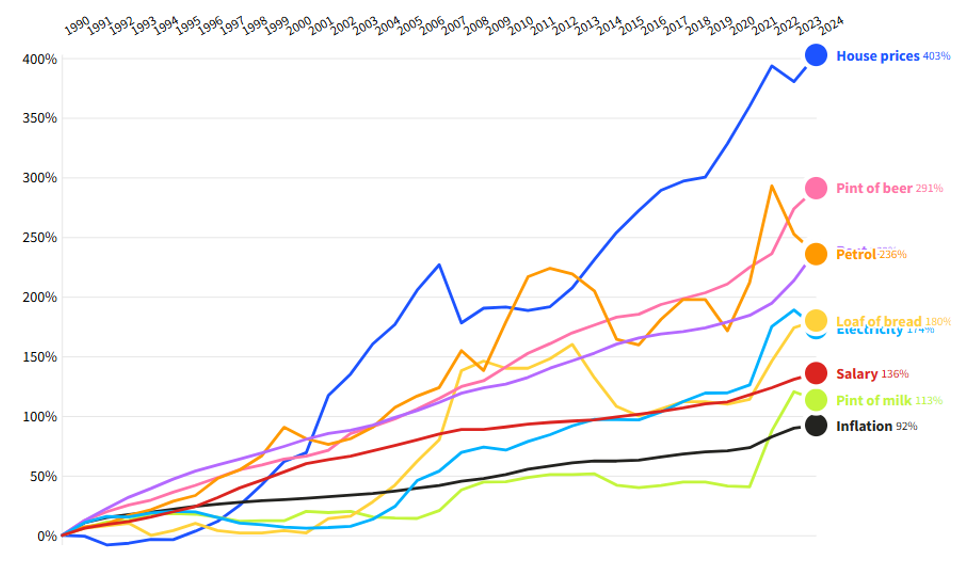
You can also show that inflation is not the only factor affecting the cost of goods and services. The graph below highlights how prices can sometimes increase way above inflation, simply by virtue of demand.
Cost of living price tracker
Source: Finder
According to Finder:
- The average house price rose from £53,337 in 1995 to £268,087 in 2024 – a 403% increase.
- A tank of unleaded petrol was £23.10 in 1990, climbing to £77.55 in 2024 – a 236% increase.
- A pint would have cost £1.22 in 1990. In 2024, that same pint would have cost £4.77 – a 291% increase.
Teaching your children and grandchildren that prices do not stay static, and that their pension needs to outperform inflation, is a vital step in managing their expectations.
Compound growth is a young saver’s greatest asset
Time is the single most powerful tool a young worker possesses. That said, immediate financial pressures such as rent, everyday living costs, and saving for a house deposit often push pension planning to the bottom of their priority list.
If your child or grandchild delays contributions during the first decade of their career, they miss out on some of the most powerful years of compound growth, making it harder to catch up later.
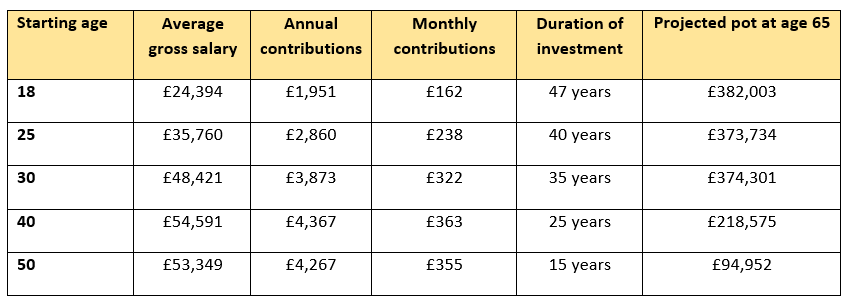
Consider a worker saving toward retirement at age 65, assuming a rate of return of 5.3% and basic workplace contributions of 8%.
The following calculations are adjusted for inflation.
Source: Starling Bank and Aviva
As the projections show, even starting at age 18 on basic contribution levels leaves savers far short of the £1 million pension target. While salary growth and career progression will increase those numbers over time, basic workplace contributions alone are unlikely to bridge the retirement gap.
If you are in a position to support your adult children financially, subsidising their early savings could be far more impactful than providing an inheritance later in life.
Use tax-efficient gifting and pension-building strategies to help the next generation
Handing down your wealth does not have to wait until you pass away.
Paying directly into a child or grandchild’s pension scheme could be one of the most tax-efficient ways to transfer wealth to future generations.
Moreover, it ensures the money remains tucked away for its intended long-term use. Here’s what you need to know:
- Parents and grandparents can contribute up to £2,880 net per tax year into a Junior self-invested personal pension (SIPP) for a child under 18. Tax relief automatically tops this up to £3,600.
- According to calculations from the Financial Times, this could amount to a pot value of more than £104,900, adjusted for inflation.
- If they continued to invest this money and make minimum contributions for 47 years, their pot could grow to £1,568,421.
- Their salary and contributions are likely to increase as they age, so this number could be significantly higher.
Additionally, by using your annual £3,000 Inheritance Tax gifting exemption, you can reduce your own taxable estate while protecting your family from any future tax liability.
We’re here to help
Building intergenerational wealth and protecting your family from future financial shortfalls requires a structured, long-term approach. Whether you want to explore tax-efficient gifting options, set up a Junior SIPP, or review your broader estate plan, we’re here to help.
If you have any questions or would like to discuss your family’s financial plans, please email admin@futureplanningwm.co.uk or call 01793 575553. You can also read our Back to School guide: How to build a nest egg to fund your children’s education to find out more.
Please note
This article is for information only. Please do not act based on anything you might read in this article. All contents are based on our understanding of HMRC legislation, which is subject to change.
A pension is a long-term investment not normally accessible until 55 (57 from April 2028). The fund value may fluctuate and can go down, which would have an impact on the level of pension benefits available.
Workplace pensions are regulated by The Pensions Regulator.
