
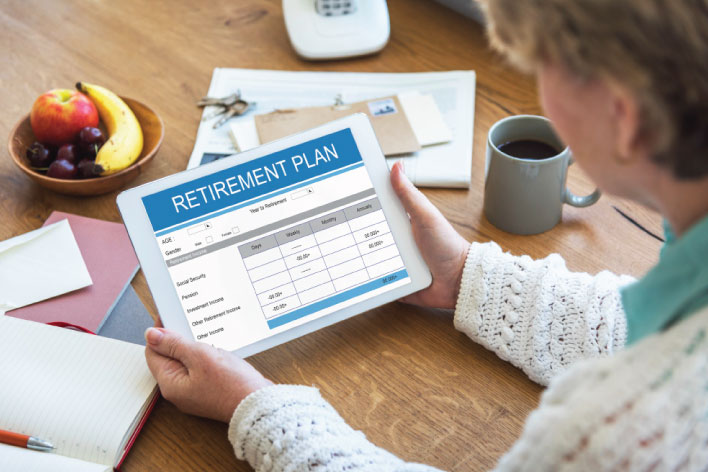
Retirement can feel a long way off, but one question becomes increasingly important as the years pass: Is my pension enough for retirement? Whether you are in your 30s, approaching your 50s or planning to retire within the next few years, understanding where you stand can help you make more informed decisions about your future.
The answer depends on more than the amount shown on your pension statement. Your retirement age, expected living costs, State Pension entitlement, other savings and the lifestyle you want to maintain will all influence whether your pension is on track.
At Future Planning, understanding your financial position is an important starting point for making informed decisions about your future. By reviewing your pension savings, expected income, spending requirements and retirement goals, you can identify potential gaps and explore ways to improve your financial readiness.
In this guide, we explain how to check whether your pension is on track for retirement, how to estimate your future income and what steps you can take if your pension savings may not be sufficient.
Quick Answer: How Do I Know If My Pension Is on Track for Retirement?
Your pension is potentially on track for retirement if your projected pension income, State Pension and other reliable income sources are expected to cover your essential expenses and desired lifestyle throughout retirement.
To check your progress:
- Review your current workplace and personal pension savings.
- Check your State Pension forecast and expected State Pension age.
- Estimate your annual retirement living costs.
- Calculate your projected income from all sources.
- Compare your expected income with your retirement spending.
- Consider inflation, investment performance, tax and how long your money may need to last.
- Review your retirement plan regularly and make adjustments where necessary.
The most important figure is not simply the amount in your pension pot. It is whether your expected retirement income can realistically support the lifestyle you want.
Is My Pension Enough for Retirement?
Your pension is likely to be enough if your expected retirement income can cover your essential expenses and the lifestyle you want throughout retirement. To assess this, compare your estimated income from workplace pensions, personal pensions, the State Pension and other sources against your expected spending.
There is no single pension pot that guarantees a comfortable retirement for everyone. Someone who owns their home outright may have different financial needs from someone who expects to pay rent or a mortgage after retiring.
Start by answering three questions:
- How much annual income will I need in retirement?
- How much income are my pensions and other assets likely to provide?
- Is there a gap between the two?
The difference between your expected income and your estimated spending will help you understand whether you are on track or need to review your plans.
What Does It Mean to Be on Track for Retirement?
Being on track for retirement means having a realistic plan to generate enough income and financial resources to cover your expected expenses throughout retirement.
This does not necessarily mean having a particular amount saved in your pension pot. Two people with identical pension savings could have very different retirement outcomes because one owns their home outright, while the other still has mortgage payments or rent to pay.
Your retirement plan should consider whether your expected income can support:
- Essential expenses, including food, household bills and council tax.
- Housing costs, including rent, mortgage repayments and maintenance.
- Healthcare, insurance and unexpected expenses.
- Holidays, hobbies, leisure activities and other personal goals.
- Financial commitments to a partner, family members or dependants.
- Inflation and the possibility of living longer than expected.
The key principle is simple: your pension is on track when your projected retirement income, savings and other financial resources are sufficient to support your expected lifestyle over the long term, allowing for uncertainty and changing costs.
How Do I Calculate My Expected Retirement Income?
To understand whether your pension is on track, bring together all the income sources you expect to have after you stop working.
1. Check your workplace pensions
If you have worked for several employers, you may have more than one workplace pension. Review your latest statements to understand the current value of each pension and the estimated benefits it may provide.
The type of pension matters:
- Defined contribution pension: Your retirement income depends on the size of your pension pot, investment performance, charges and how you choose to access the money.
- Defined benefit pension: Your scheme typically promises an income calculated using factors such as your salary and length of service, subject to the scheme’s rules.
Do not assume that your current pension value is the amount you will receive as annual income. Check the retirement income illustrations and the assumptions used by your provider.
2. Include your personal pensions
Personal pensions and self-invested personal pensions (SIPPs) may contribute to your retirement income alongside workplace arrangements.
If you have multiple pension accounts, gather their latest statements and record the current values, projected benefits, charges and intended retirement dates. This helps you avoid overlooking savings accumulated earlier in your career.
3. Check your State Pension forecast
The State Pension can provide an important foundation for retirement income, but you should not assume that you will automatically receive the full amount.
Your entitlement depends on your National Insurance record and the rules that apply to your circumstances. Use the official GOV.UK State Pension forecast service to check how much you could receive and when you may qualify.
You can also check your National Insurance record to identify gaps and understand whether further action may be worthwhile.
For reference, the full new State Pension rate for 2026/27 is £241.30 per week. This is not the amount everyone receives; your own forecast is the more relevant figure for planning.
4. Add other potential income
Your retirement income may also include:
- Savings and cash deposits.
- Income from rental property.
- Investment income outside your pension.
- Part-time work or business income.
- Other eligible benefits or income sources.
Include only income you reasonably expect to receive. For example, rental income should account for expenses and periods without a tenant rather than assuming the entire rent will be available to spend.
How Can I Tell If My Pension Is on Track?
Once you have estimated your annual spending and retirement income, compare the figures.
For example, imagine you expect to spend £30,000 per year in retirement. Your estimated income might look like this:
| Income source | Illustrative annual income |
| State Pension | £12,000 |
| Workplace pension | £10,000 |
| Personal pension withdrawals | £5,000 |
| Total estimated income | £27,000 |
| Potential annual shortfall | £3,000 |
These figures are illustrative only, not a pension forecast or recommendation. Actual State Pension entitlement, pension income, tax and investment outcomes will vary.
In this example, there is a potential £3,000 annual gap between expected income and spending. You could explore whether increasing pension contributions, adjusting your retirement date, reviewing expected expenses or using other assets may help close it.
Remember to compare figures on a consistent basis. Your spending estimate should account for inflation, and your income estimates should make clear whether they are before or after tax. Pension calculators also use assumptions about investment growth and future contributions, so their results are estimates rather than guarantees.
What Are the Signs That My Pension May Not Be Enough?
Several warning signs suggest it may be time to review your retirement plans.
Your projected income is below your expected spending. If your pension forecasts do not cover your estimated costs, you may need to explore ways to reduce the gap.
You have not checked your pension statements recently. Old forecasts may no longer reflect your current savings, contributions or retirement plans.
You have gaps in your pension savings. Time away from work, changing jobs or periods of self-employment may affect how much you have accumulated.
You plan to retire earlier than expected. Retiring sooner may mean fewer years of contributions and less time for your investments to grow. Taking certain pensions early may also reduce the income they provide.
You have not accounted for inflation. The amount you need today may not buy the same goods and services in the future.
You are relying on one source of retirement income. Understanding how your pension, savings and other assets work together can help you identify potential liabilities.
These signs do not automatically mean you cannot afford to retire. They indicate that your assumptions and options deserve a closer look.
How Can I Improve My Pension If I Am Falling Behind?
If your estimated retirement income falls short of your target, you may have several options. The right approach depends on your age, finances, pension arrangements and how much flexibility you have.
Increase your pension contributions
If you can afford to save more, increasing your contributions may help build your retirement fund. Check whether your employer offers matching contributions and understands the tax relief available under the rules that apply to you.
Even a modest increase may make a difference over time, although the eventual result depends on contributions, investment performance, charges and the time remaining until retirement.
Review your retirement age
Working for longer may give you additional time to contribute to your pension and allow your savings more time to grow. Delaying access to certain pensions may also change the benefits available, depending on your scheme and circumstances.
However, your health, family commitments and personal preferences are equally important. Retirement planning should reflect the life you want, not just a financial target.
Review your spending plans
Look at your expected retirement expenses and identify which costs are essential and which could be adjusted. You may be able to change discretionary spending, but avoid assuming that you can reduce essential expenses indefinitely.
A realistic budget is more useful than an unnecessarily restrictive one.
Review your pension arrangements and charges
Understand the charges on your pension and the investment options available within each scheme. Charges can affect long-term outcomes, but transferring a pension is not automatically beneficial. Consider any valuable guarantees, benefits, exit charges and differences between schemes before making changes.
Consider your wider financial position
Your pension is only one part of retirement planning. Savings, investments, housing costs, debts and other income may affect how much pension income you need. Looking at these together can help you make more informed decisions.
For a broader introduction to the process, read Retirement Planning Explained: A Simple Guide for the UK.
When Should I Start Checking My Pension?
The best time to check your pension is now, regardless of how far away retirement seems. Starting earlier generally gives you more time to identify gaps and consider your options.
- In your 30s and 40s: Review your contributions, pension statements and long-term goals. Small adjustments may have more time to build up.
- In your 50s: Check your projected income more closely, review your intended retirement age and consider whether your current savings support your plans.
- Within five years of retirement: Build a realistic income and spending estimate, confirm your pension options and understand how you will access your money.
- Already retired: Review withdrawals, expenditure and other income regularly to check whether your plan remains sustainable.
You do not need to wait until retirement is close to make a useful assessment. A regular review can help you respond as your circumstances change.
Should I Use a Pension Calculator?
A pension calculator is a useful starting point because it can estimate your future income and compare it with a retirement income target.
MoneyHelper’s Pension Calculator allows you to enter details about your pensions, contributions and intended retirement age. You can explore how changing some of these inputs may affect your estimated income.
To get a more useful result, gather:
- Your current pension values.
- Estimated benefits from defined benefit schemes.
- Your current contributions and any employer contributions.
- Your intended retirement age.
- Your State Pension forecast.
- An estimate of your future spending.
Treat the result as a guide rather than a promise. Calculators rely on assumptions, and actual investment returns, inflation, charges, tax and future circumstances may differ.
If your pension arrangements are complex or the result is difficult to interpret, you may wish to seek guidance or regulated financial advice.
When Should I Consider Professional Retirement Planning Advice?
Professional advice may be worth considering if you have several pension schemes, are approaching retirement, need to compare income options or are uncertain whether your savings will support your desired lifestyle.
A financial adviser can help you review your overall financial position, understand possible retirement scenarios and identify questions that need further investigation. The service and cost will depend on your needs, so ask what is included before proceeding.
At Future Planning, understanding your retirement goals and current financial position can help establish what planning support may be appropriate. A clear assessment can help you identify the decisions you need to make and the options available to you.
Advice cannot guarantee investment performance or a particular retirement outcome. Its purpose is to help you make informed decisions based on your circumstances, objectives and tolerance for risk.
Frequently Asked Questions
Is my pension enough for retirement if I own my home?
Owning your home outright may reduce your retirement expenses because you may not have rent or mortgage payments. However, you still need to budget for maintenance, household bills, council tax and everyday living costs. Compare your expected pension income with your actual spending needs.
How much pension should I have by age 50?
There is no single pension pot target that applies to everyone at age 50. The amount you need depends on your intended retirement age, desired lifestyle, existing pension benefits, State Pension entitlement and other assets. A retirement income forecast is more useful than comparing your savings with a generic target.
Can I retire if my pension is small?
Possibly, but you need to understand how your pension, State Pension, savings and other income will cover your expenses. You may need to consider working longer, increasing contributions, adjusting spending or exploring other options. Check your individual circumstances before making a retirement decision.
Does the State Pension cover all retirement expenses?
Not necessarily. Your State Pension entitlement and your cost of living may differ considerably from those of other people. Check your forecast and compare it with your expected expenses to understand how much additional income you may need.
What should I do if my pension forecast is lower than expected?
Start by checking your pension records and estimating your likely retirement spending. Then explore whether higher contributions, a different retirement date, revised spending plans or a review of your wider finances could help. Consider professional advice if you need help assessing complex options.
Key Takeaways: Is Your Pension on Track for Retirement?
Knowing whether your pension is enough for retirement starts with understanding how much income you may need and how much you are likely to receive.
- Estimate your retirement spending, including housing, essentials and lifestyle costs.
- Review workplace and personal pensions and check your State Pension forecast.
- Compare your expected income with your target and identify any potential shortfall.
- Consider whether contributions, retirement timing or spending plans need to change.
- Review your pension regularly and seek appropriate guidance or advice if you need help evaluating your options.
Retirement planning is not about reaching one universal pension target. It is about understanding your own financial position and making informed decisions that support the retirement you want.
Future Planning can help you explore your retirement planning needs and understand the options available for your circumstances.
